Work Categories
 London, UK
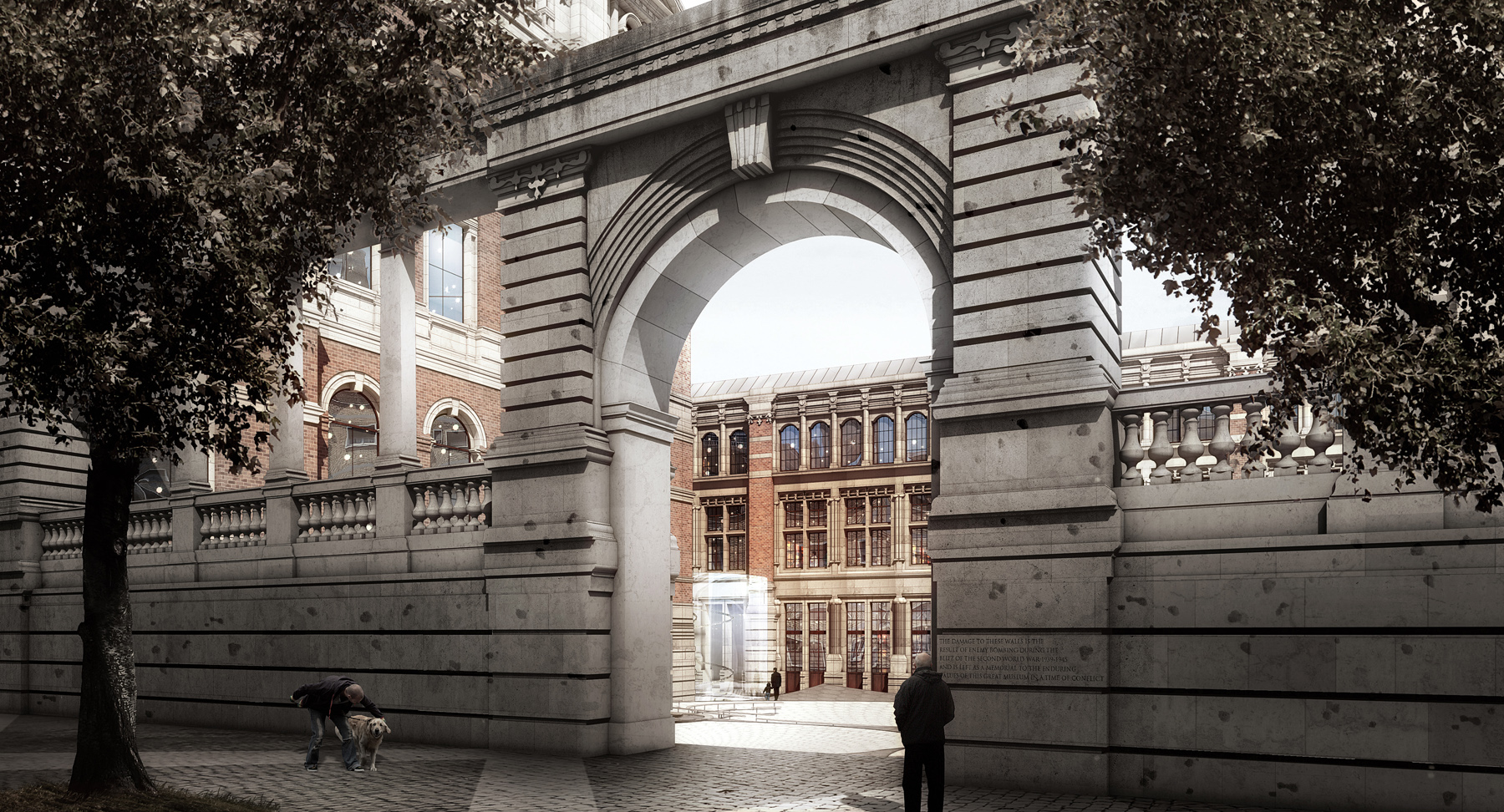
At the urban scale, the courtyard provides a new entrance and activity space engaging Exhibition Road. At the exhibition masterplan scale, the temporary exhibition provides a critical missing void.
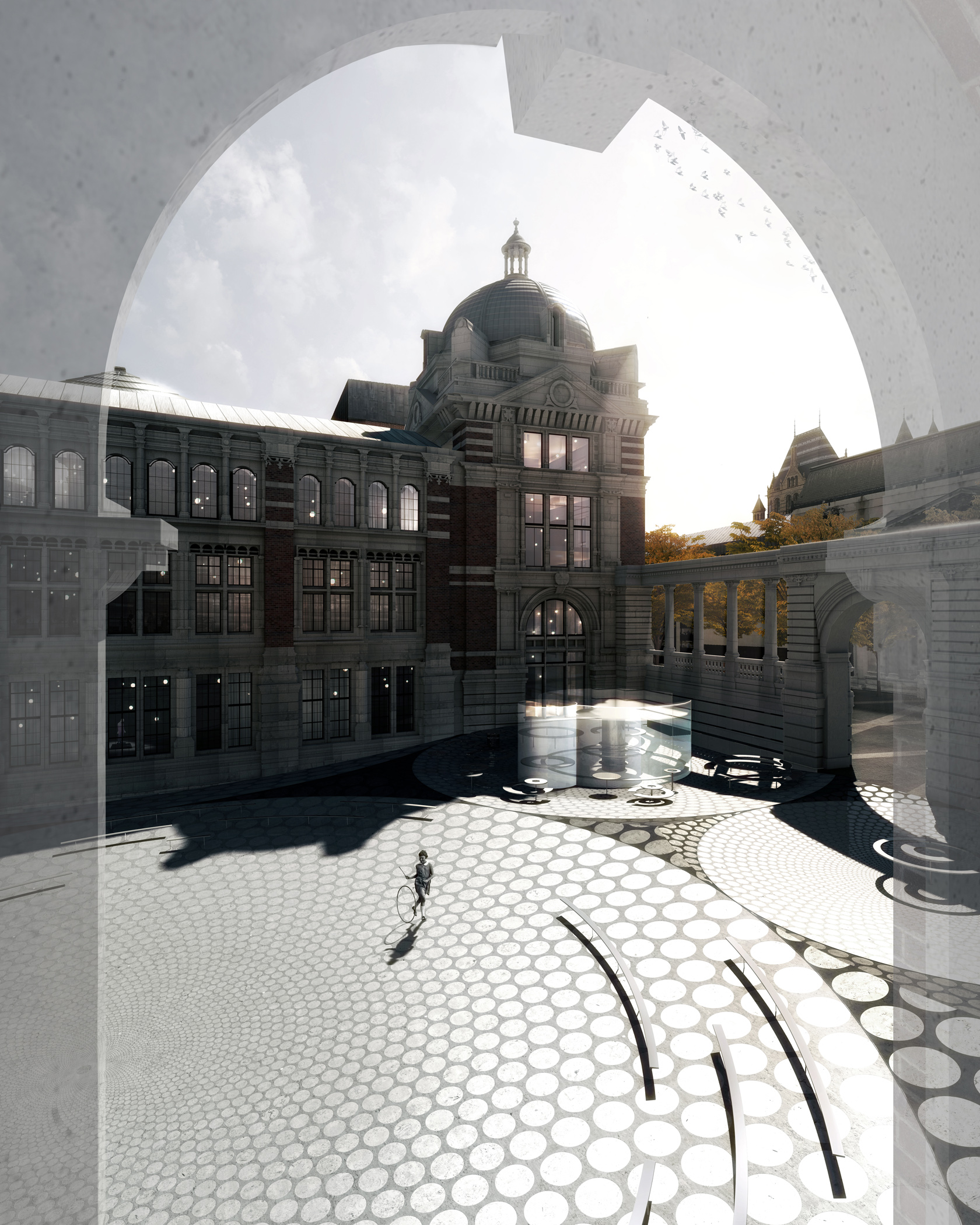
The decision to extract the existing contents from the Boilerhouse Yard, exposes for the first time a hidden void; an urban courtyard defined by 4 uniquely different facades. The proposal retains the flexibility of this condition by operating on its last remaining surface, an occupiable sloped ground plane or visible horizon.
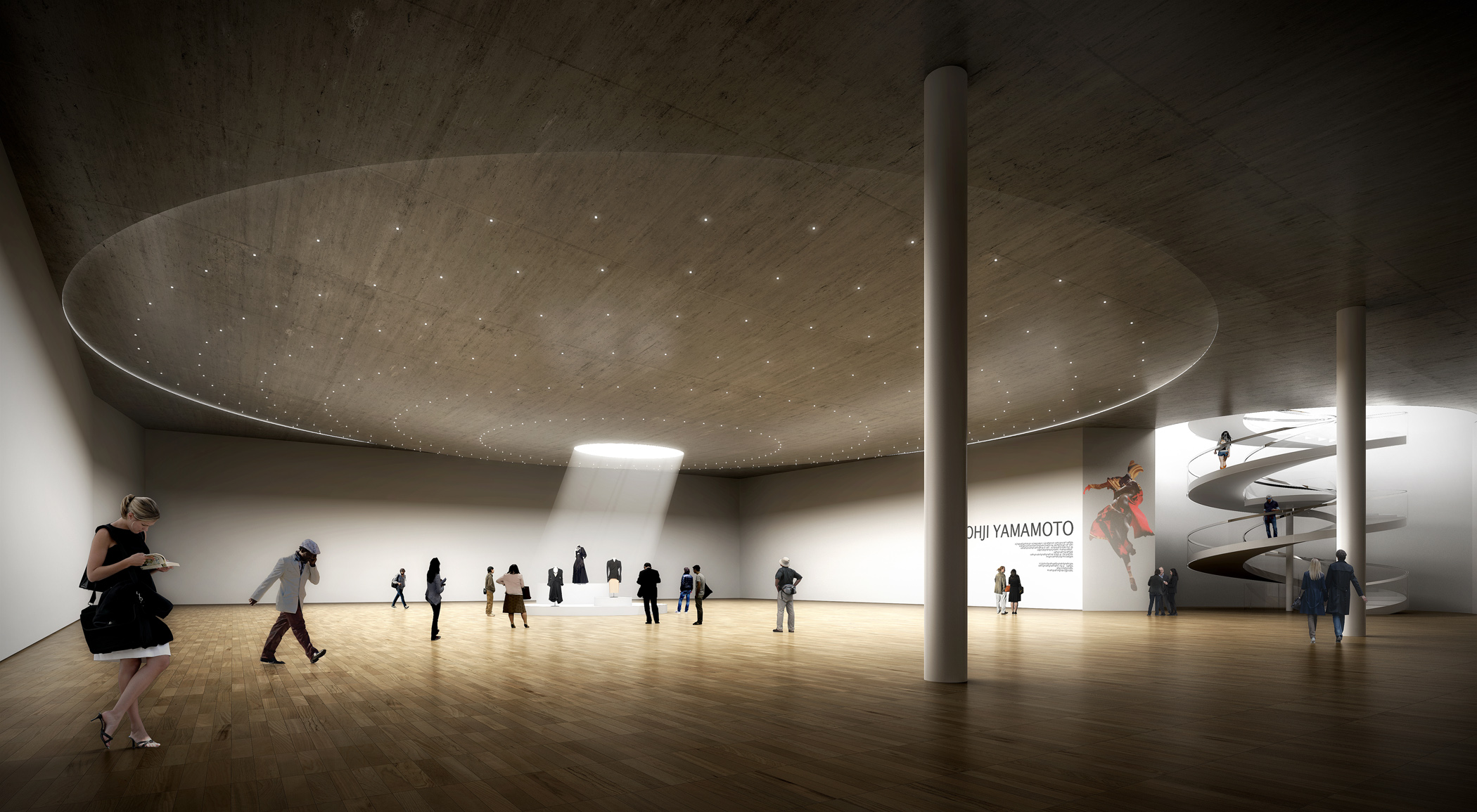
A second decision to excavate a void below the courtyard, provides for the V&A the needed 'maneuvering room' to change & unlock spaces within the larger masterplan in addition to a new temporary exhibit space.
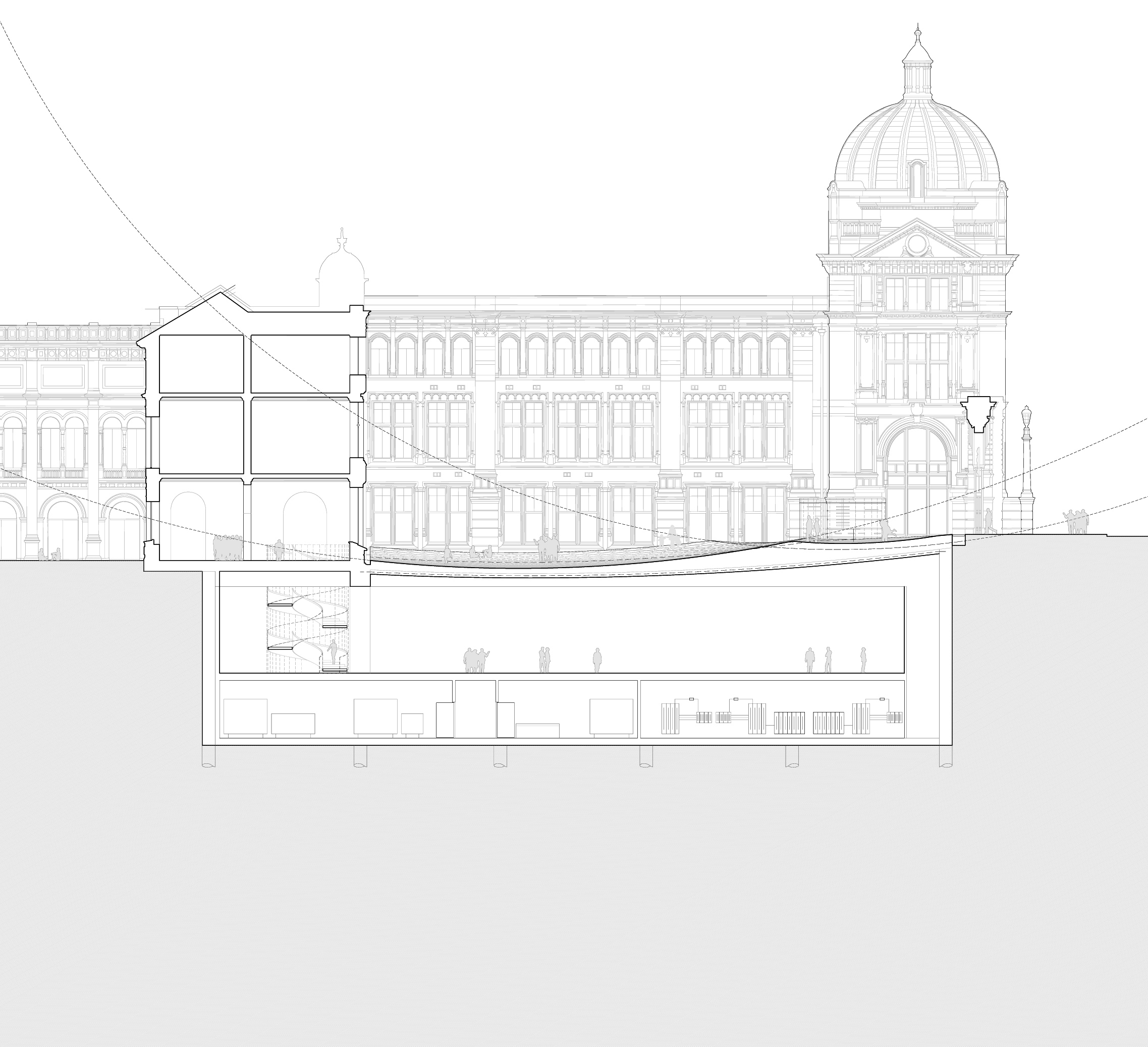
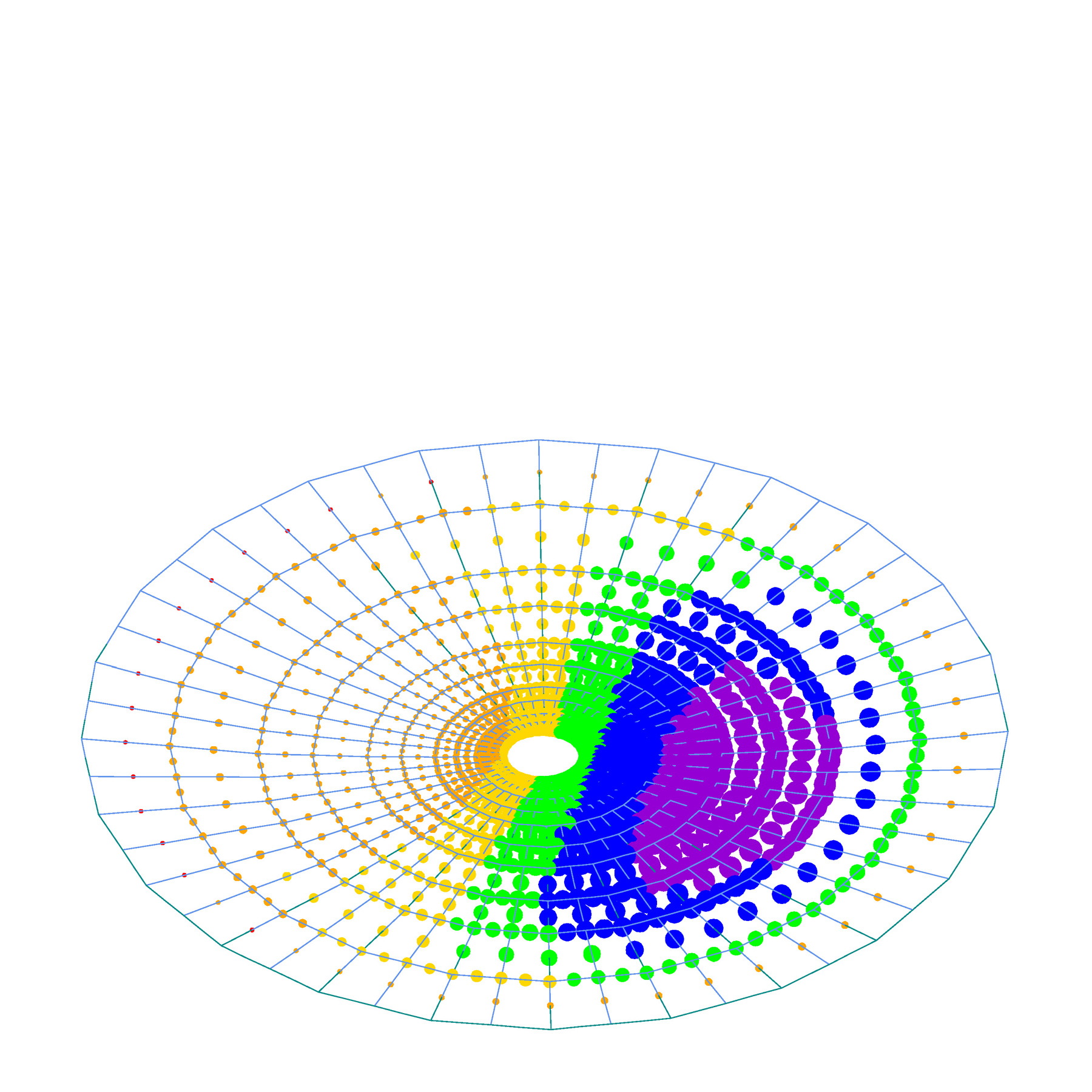
A continuous catenary shaped concrete tensile shell that provides a column free exhibition space below in minimal depth, supports the amphitheatre domes which define activities above.
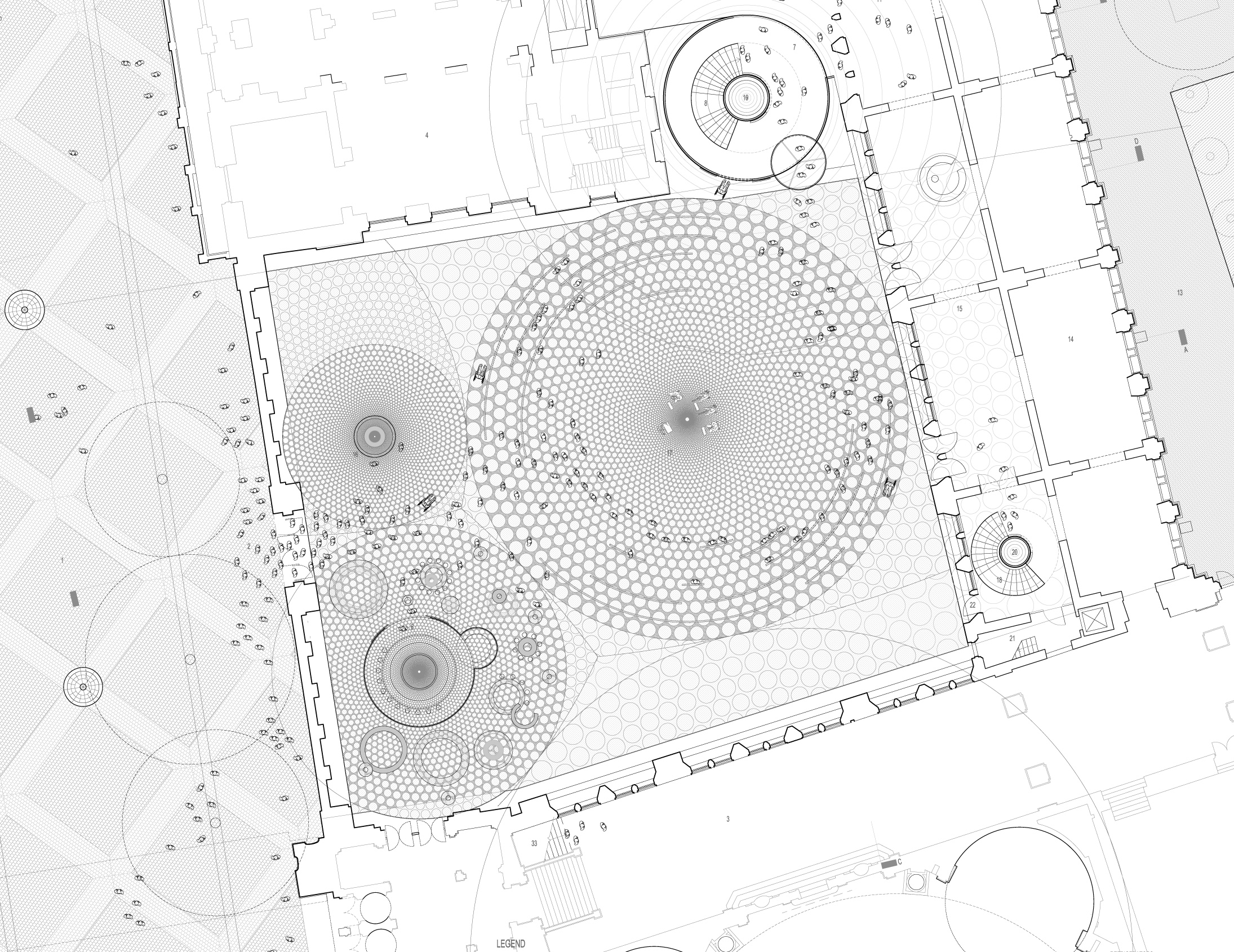

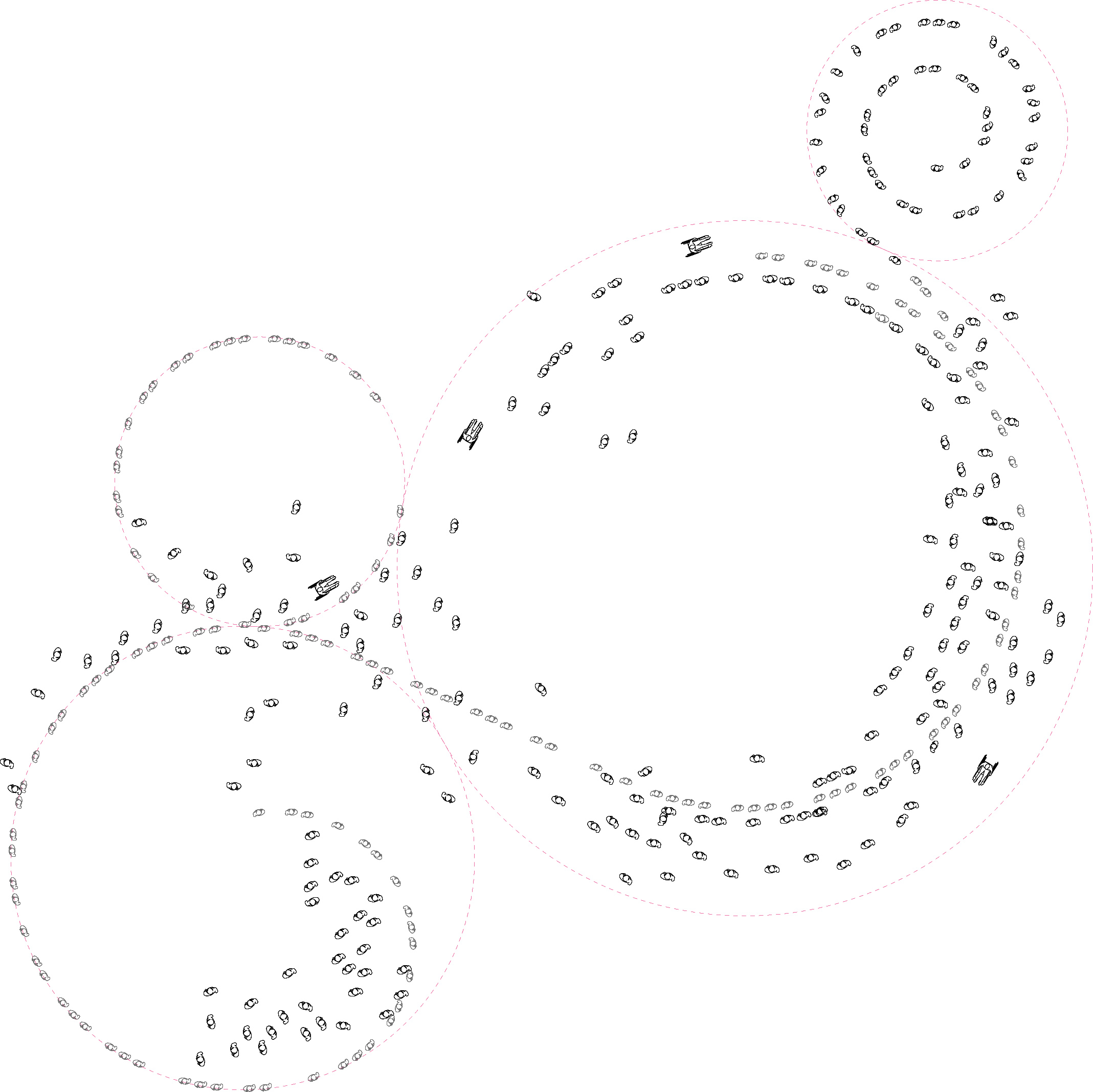
3 domes extend the domical roofscape of the existing V&A onto the surface of the courtyard, defining the individual rooms or events yet connected within an overall undulating landscape.

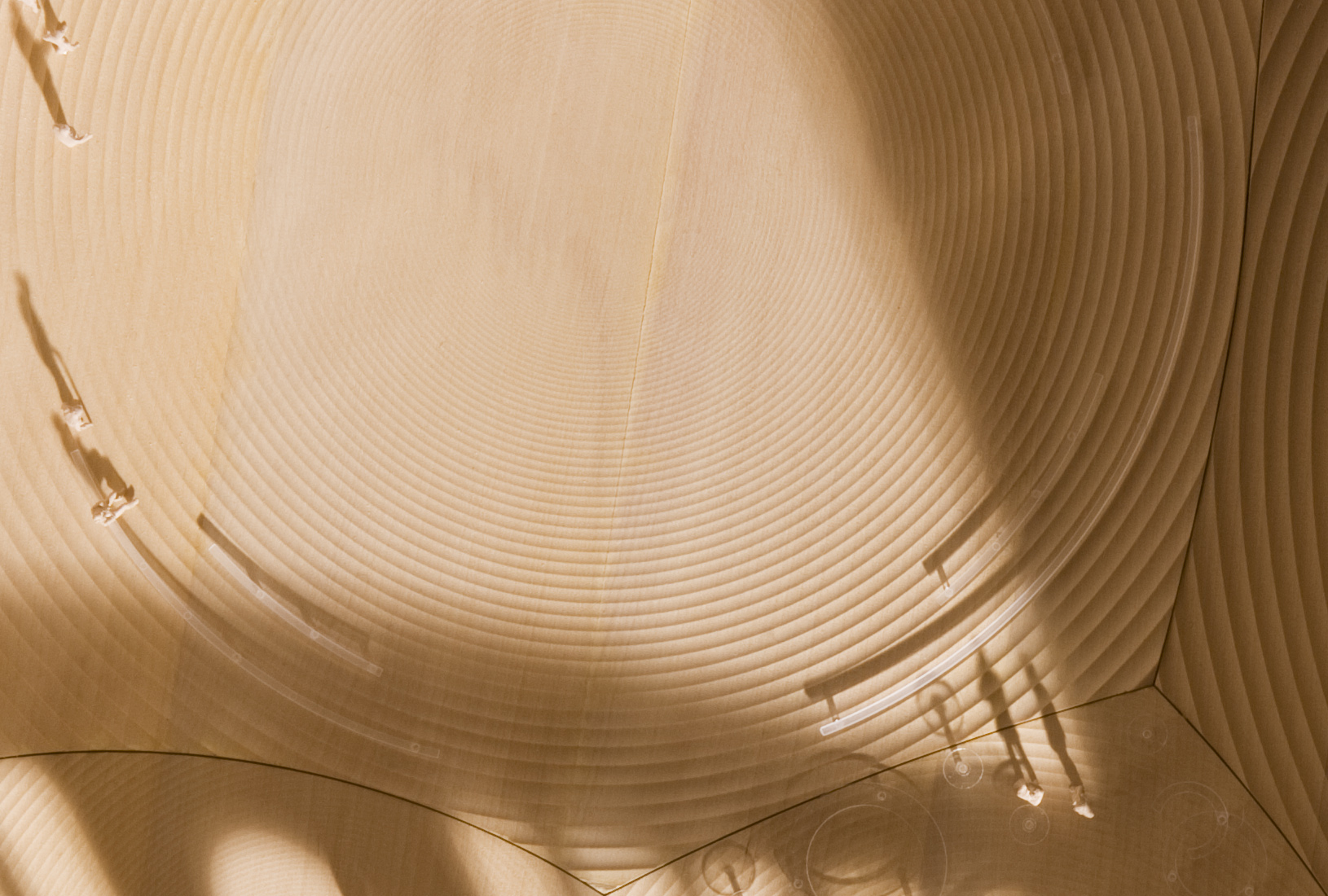
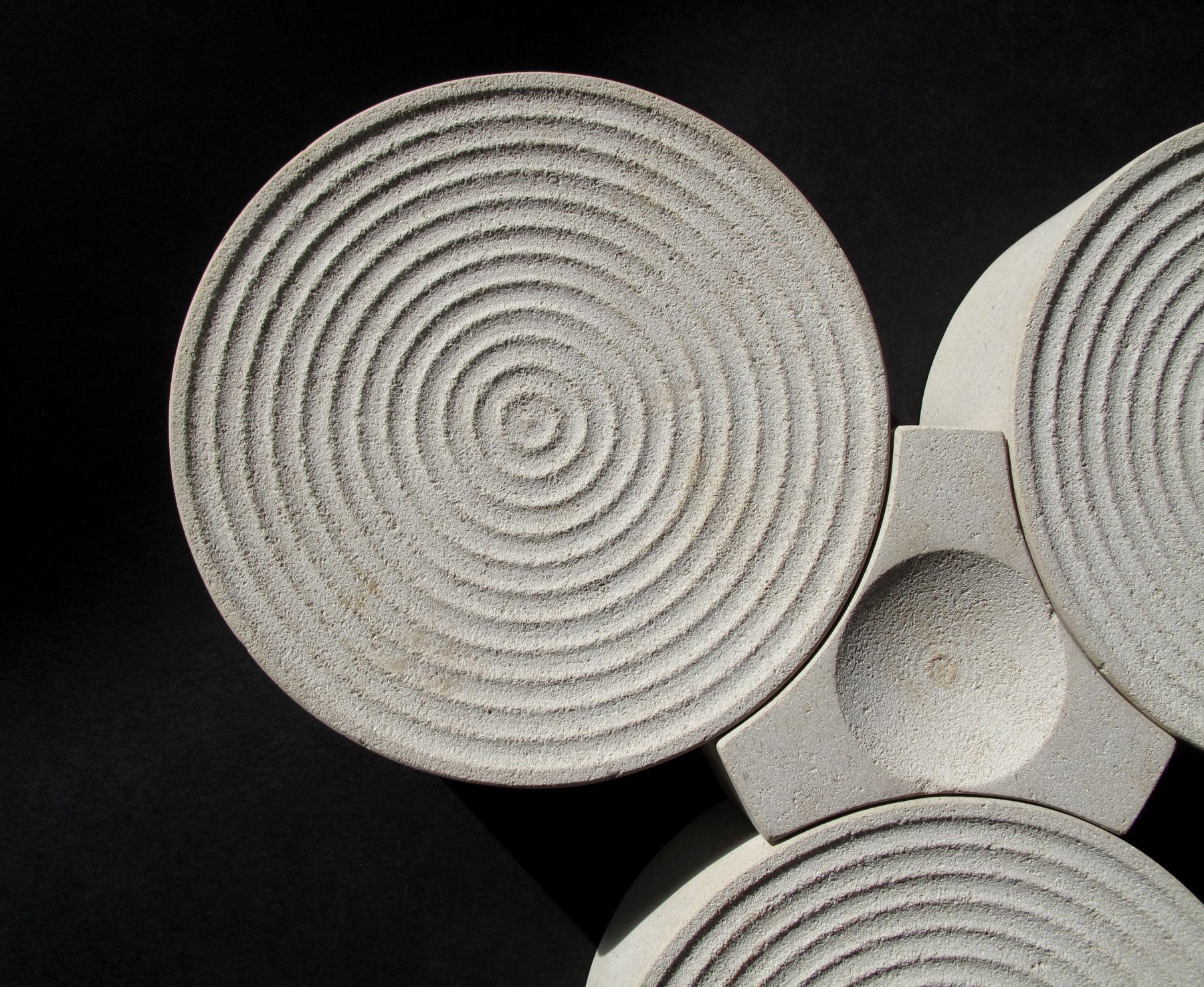
The stone paving is derived from Fibonacci patterning found in sunflowers to create the sense of depth in the domes, allowing the sloped plane to achieve full Accessibility & hence flexibility of the domical landscape.
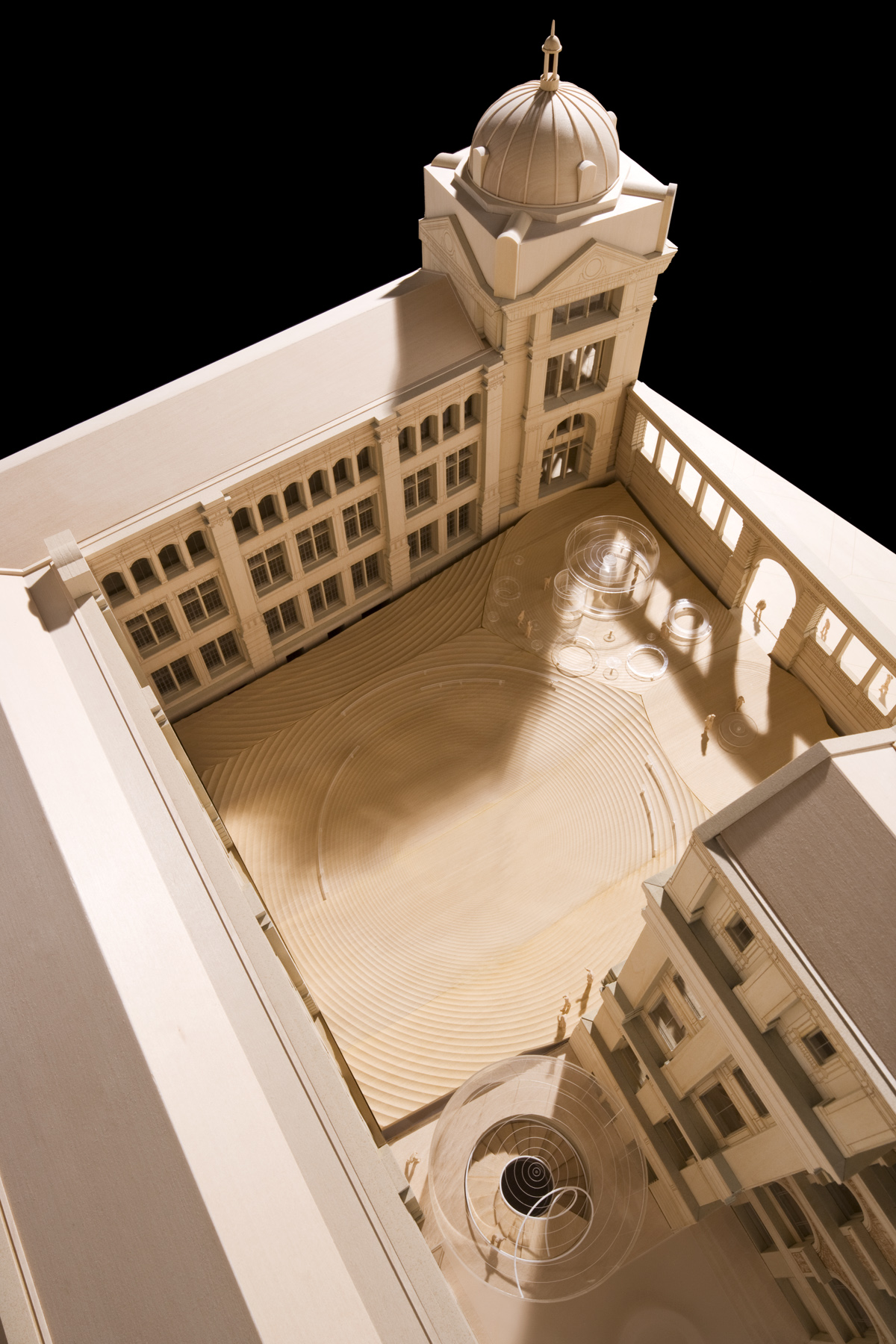

A spiral drum, stair & chandelier marks a new entrance into the V&A. The position it occupies remains the only resultant void left in a continuous courtyard facade. Strategically, the entrance acts as a hinge providing optimum connections to Education, Cafe, Galleries & Temporary Exhibition.
Fact sheet
Client
V&A
Date
2011 Q1
Location
London, UK
Collaborators
Structures | Civil
Arup
Services
Buro Happold
Lighting
Bartenbach Lichtlabor
Cost
Davis Langdon
Rendering
Luxigon
Model
Andrew Ingham & Associates
Model Photography
Richard Davies
Specialist Stone
S McConnell & Sons
Contact
heneghan peng architects
14–16 Lord Edward Street, Floor 2
Dublin D02 YC63, Ireland
Tel +353 (0)1 633 9000
Fax +353 1 633 9010
Potsdamer Strasse 98a, 4. OG
10785 Berlin
Germany
Tel +49 30 20 89 88 750
Fax +49 30 20 89 88 759
Back to Top | Website by Conor & David